
















 |
| Weight Control |
| Eating Right and Keeping it Off | ||
Keeping a healthy weight is good for your physical and mental well-being. Proper eating habits and moderate exercise are crucial to keeping your weight healthy and your body fit. Being overweight is a problem for many people in the United States. They are more likely to have medical conditions and some cancers. Extreme weight loss and being very underweight also can be bad for your health. |
||
| What Is a Healthy Weight? | ||
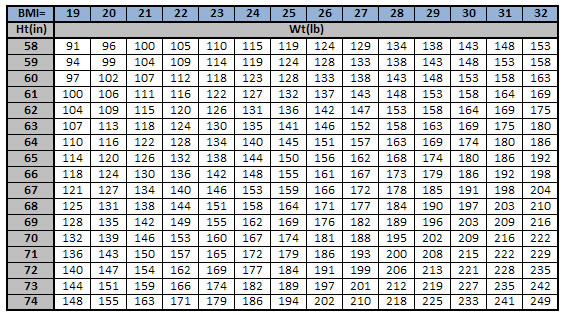
To stay healthy, you should keep your weight at the level best for your height. Different tables have been used to show ideal weights. You may have seen tables that suggest different weights for men and women based on age, height, or body frame sizes. Today many doctors use the body mass index (BMI) chart shown here to check if your weight is healthy. The BMI compares a person's height to their weight to see if they are overweight. Having a BMI of 20-24 is normal, and 25-29.9 is overweight. A woman with a score of 30 or higher is obese. The shape of your body is also a factor in keeping a healthy weight. Excess fat in the abdomen (an "apple" shape) is believed to be a greater health risk than fat in the hips and thighs (a "pear" shape). A BMI over 30 is often associated with high blood pressure, diabetes and cancer as well as other medical illnesses. |
||
| About Fat | ||
Everyone must have some body fat. Fat provides a form of energy. Energy not used is stored in the fat cells. If you are overweight, you likely have too much fat stored. Fat normally makes up about 20-25% of a woman's body weight. In most cases, men have less body fat--about 15-20% of their body weight. A BMI is not the whole answer… your body fat percentage is also useful information. Many health clubs can help you measure your body fat. |
||
| BODY MASS INDEX CHART | ||
 |
||
To calculate your body mass index, find your height in inches in the left column. Then look across the line to find your weight in pounds. The number at the top of that column is your BMI. A certain amount of body fat helps women to maintain their estrogen levels. Estrogen is a female hormone that controls a woman's menstrual cycle. The shape of a woman's body is partly the result of estrogen. Having too little body fat may cause estrogen levels to drop. If these levels are too low, a woman's menstrual periods might become irregular or even stop. |
||
| Factors That Affect Weight | ||
People who are overweight often eat too much and exercise too little. Every function of the body--from building cells to moving muscles--requires energy. Energy is measured in calories. Calories measure how much fuel is in a certain food. When this fuel is burned, calories are used. The body uses only as much of its daily intake of food as it needs for energy. The energy that remains is stored as fat in the body. An average woman needs about 2,200 calories a day. If you eat 3,500 calories more than you burn off, you will gain one pound. A number of factors effect weight gain: • People tend to weigh more as they age. It is normal for people to be a little heavier as they grow older. This is caused by the natural decrease in metabolism that occurs with aging. You have to be more active as you age to avoid gaining this age-related weight. • A woman might not lose all of the weight she gained during pregnancy. If this happens with each pregnancy, the weight can add up. • A woman may have a hard time losing weight because of her metabolism--how your body uses the energy found in the foods you eat. People burn food at different rates. Even if you do not overeat, you might find it hard to lose weight or keep a healthy weight if you don't exercise. People gain extra weight when fat cells fill and grow. In most people, fat cells increase with growth spurts, such as in infancy and childhood. If you have children, their doctor can help you plan a healthy diet for them. It should include some fat--it is needed for growth. Too much fat in their diet, though, can result in adding fat to their bodies that will be hard to lose later. |
||
| Health Hazards of Being Overweight | ||
Many health concerns directly relate to being obese or overweight. The more you weigh over the suggested range, the higher your risk of heart disease. Heart failure occurs almost three times more often in obese women than in women of normal weight. High blood pressure and a lifestyle that is not active raise the risk of heart disease. These risk factors are often found in overweight people. Many overweight people have high cholesterol. High cholesterol can lead to coronary artery disease. This disease is a clogging of the arteries by cholesterol or fat deposits. With excess weight, the heart has to work harder. The risk of coronary artery disease increases and less blood gets to the heart. In time, arteries in the neck may clog. At some point, blood clots may move through the arteries and increase the risk of heart attacks or stroke. In fact, the risk of stroke among overweight people is four times greater than for people of healthy weight. Diabetes is one more hazard of being overweight. People with diabetes have levels of sugar in their blood that are too high. Doctors estimate that 85% of people with diabetes have the type related to being overweight. These people have enough insulin in their bodies, but the insulin cannot do its work of keeping sugar levels in the blood under control. As a result, sugar needed to nourish your body cannot get into the cells. A healthy diet and regular exercise can go a long way toward helping people with diabetes control the disease. Gallbladder disease is found most often in obese women. Gallstones have been linked to high-calorie diets. Overweight women are more likely to have certain kinds of cancer. Cancer of the endometrium is five times more common in overweight women than in women with healthy weights. Breast, colon, and rectal cancers also are more common in overweight women. These types of cancer may be linked to diet. Some of these risks can be reduced by eating a healthy, low-fat diet and exercising. |
||
| Problems During Pregnancy and Childbirth | ||
Both over- and underweight women may have problems getting pregnant. The more overweight or underweight they are, the less likely it is to occur. If overweight women become pregnant, they may face certain problems during pregnancy. They are more prone to diabetes or high blood pressure during pregnancy, which are linked to being overweight. Obese women also are more likely to have a cesarean birth because their babies are too large to fit safely through the birth canal. There is an increased risk of complication during any surgery--including a cesarean birth--for any obese person. Excess weight gained during pregnancy might be hard to lose after the birth of a child. If a woman is 20% overweight before she becomes pregnant, she needs to gain less than mothers of normal weight. A doctor will be able to tell a woman how much weight she should gain based on her weight before getting pregnant. A woman should never try to lose weight while she is pregnant. |
||
| Health Through Weight Control | ||
There is no magic answer to taking off weight and keeping it off. The best way to lose weight is to exercise and eat fewer calories. Losing weight requires a long-term commitment to good eating habits and regular exercise. "Yo-yo" or on-and-off dieting is not healthy. Healthy habits help to reduce or reverse health hazards of being overweight. A person who loses weight will feel better and find it easier to be more active. Losing weight is hard. A doctor or nurse, sometimes working with a nutritionist, can help you plan a healthy weight-loss program. You may need some emotional support as well. Ask your Primary Care Doctor about support groups or counseling options. Take a good look at your eating habits. You may wish to keep a food diary. It can help you find patterns of what you eat and why, when, and how. Avoid extremes of diet (fewer than 1,000 calories a day) unless your doctor is guiding your diet Do not use over-the-counter weight loss aids without talking to your doctor--they may be harmful and cause problems. Look at how active you are, too. You may have to find ways to get more exercise. If you are a smoker, you may be afraid to quit because you might gain more weight. Trying to break more than one habit at the same time can be hard, but it's worth it for your health. Ask your doctor for advice. Your new healthy eating and exercise habits could improve your family's and friends' health as well. This may help you to stay on track. |
||
| Nutrition | ||
The United States Department of Agriculture guidelines for health suggest that you eat a variety of foods and maintain a healthy weight. You should choose a diet of healthy foods from the four food groups to make sure you get all the nutrients you need. These include: • Carbohydrates • Fiber • Protein • Vitamins • Minerals • Water If you are trying to lose weight, you still need all these nutrients. Choose foods that are low in fat from the four food groups. Also, learning to read a food's label will help you make healthy food choices. A high-fat diet can lead to weight gain and high levels of cholesterol. Although fat gives energy, it is high in calories. Fats contain more calories per gram (9) than proteins (4) or carbohydrates (4). Fats should make up no more than 20-30% of the total calories in an adult diet. For a balanced diet, choose foods from each of the four food groups each day. For a diet low in fat and high in fiber, check the following lists for examples of foods to select and avoid. |
||
| Choose More Often: | ||
| • citrus fruits (oranges, grapefruit); • dark-green, leafy Vegetables (spinach, collard greens, endive); • apples, berries, pears, cabbage, broccoli, cauliflower, Brussels sprouts • whole-Grain and Whole-wheat, rye, oatmeal, and pumpernickel breads; • whole-grain and bran cereals; brown, wild, or white rice; pasta with low-fat sauce; • low-fat poultry (chicken, turkey) without skin; fresh Fish, water-packed canned tuna; and lean meat trimmed of all fat; cooked dry beans and peas • low-fat or skim milk; low-fat or nonfat yogurt and cheeses (ricotta, farmer, cottage, mozzarella); sherbet; frozen, low-fat yogurt; ice milk • hard cheese (Swiss, cheddar) |
||
| Choose Less Often: | ||
• avocados, olives • yellow-orange vegetables (carrots, sweet potatoes, squash); • enriched Bread, bagels and English muffins; pretzels, Refined-flour breads and cakes; biscuits, croissants, crackers, chips; packaged rice and pasta mixes; pasta with cheese or meat sauces; cookies, pastries; granola • eggs, Nuts, frozen fish and shellfish • whole milk; butter; yogurt made from whole milk; sweet, sour, or whipped cream; creamy toppings; coffee creamers; cream cheese; cheese spreads; Brie, Camembert, • beef, veal, lamb, and pork cuts with marbling, untrimmed of fat; luncheon meats; sausage, hot dogs; peanut butter, nuts, seeds; trail mix; tuna packed in oil; duck, goose |
||
| Reading Food Labels | ||
All packaged foods must be clearly labeled with nutrition information. Reading food labels can help you make smart food choices. The label will tell you how many grams of fat and how many calories are in each serving. Avoid high fructose corn syrup.
|
||
| Proper Eating | ||
There are so many “programs” in the news… south beach, Mediterranean, Atkins, Weight watchers. What do you do? One of the simplest guidelines for balanced food intake is the ADA diet… the American Diabetes Association. They have website info and books that can show you how to get the proper servings from all the food groups daily. This is a lifestyle change that you can live with. It is a good starting plan. Pick 1500-1800 calorie plans and adjust up or down depending on your hunger level and weight response. |
||
| Exercise | ||
About two thirds of the people who try to lose weight by cutting calories without exercising gain the weight back within a year. Dieting slows your metabolism. This makes your body burn fat more slowly and makes it harder to lose weight. There are many benefits to a regular exercise program. Exercise speeds up the metabolism, which helps you lose pounds. It also strengthens and tones muscles and conditions the heart. Exercise may give you more energy and improve your mood and self-image. It is best to begin an exercise program slowly. If you have a question about your health, consult your doctor. For the best results, you should exercise at least 3 times a week for 30 minutes at a time. Once you become more fit, you can exercise longer--up to 45-60 minutes at a time every day. The best type of exercise for weight loss is steady, aerobic exercise that works the heart and lungs. Although pregnant women should not try to lose weight, moderate exercise usually is safe in pregnancy. When you exercise, fat is replaced by muscle, which weighs more than fat. This means you may lose weight slowly, even though you are losing fat. It often takes weeks before you notice results in your exercise program. But don't be discouraged: your clothes may feel looser before your scale reflects the loss. Exercise is a key to lifelong weight control. It can be fun. With a regular program, you will feel and live better. |
||
| Eating Disorders | ||
Some women have eating disorders. One type of eating disorder is anorexia nervosa. Women who have this problem have a distorted body image. They think they are fat when they weigh even less than the suggested body weight for their height and age in most cases. They lose a lot of weight and may exercise to the extreme. They often stop having periods. Bulimia is a related condition. A person with bulimia binges, or eats a lot, and then forces themselves to vomit. Unlike anorexia nervosa, though, there is no extreme weight loss. Persons with bulimia often abuse laxatives or diuretics and force themselves to vomit or go to the bathroom so they will not gain weight. Persons with anorexia may have bulimic behavior. Eating disorders can threaten your life. They require both medical attention and counseling. Most women with eating disorders have self-esteem problems that need to be treated. Working on these issues may be hard, but it can be key to your physical and emotional health. If you think you may have an eating disorder, talk with your doctor. |
||
| Finally Thoughts | ||
The key to weight control is a blend of proper eating habits and regular, moderate exercise. Success comes from changing your lifestyle. Keeping weight off will be easier if you reduce the high-fat foods in your diet. Choose exercise that you like, and vary the exercise to keep yourself interested. For instance, walk one day and bike the next. It helps to have the support of others who are trying to lose weight, too. You might want to join a program designed to help people lose weight and change eating habits. Begin your healthy patterns now, and work to make them lifelong habits. You will enjoy the benefits for the rest of your life. |
||
 |
Return to Library | ||||